Glossary · camera and shots
Types of camera shots and angles
A shot is described by two things: its size (how much of the subject fills the frame, from extreme wide to extreme close-up) and its angle (where the camera is: eye level, low, high, tilted or in a character's place). Camera moves, such as a dolly or a pan, are a third layer.
Our example
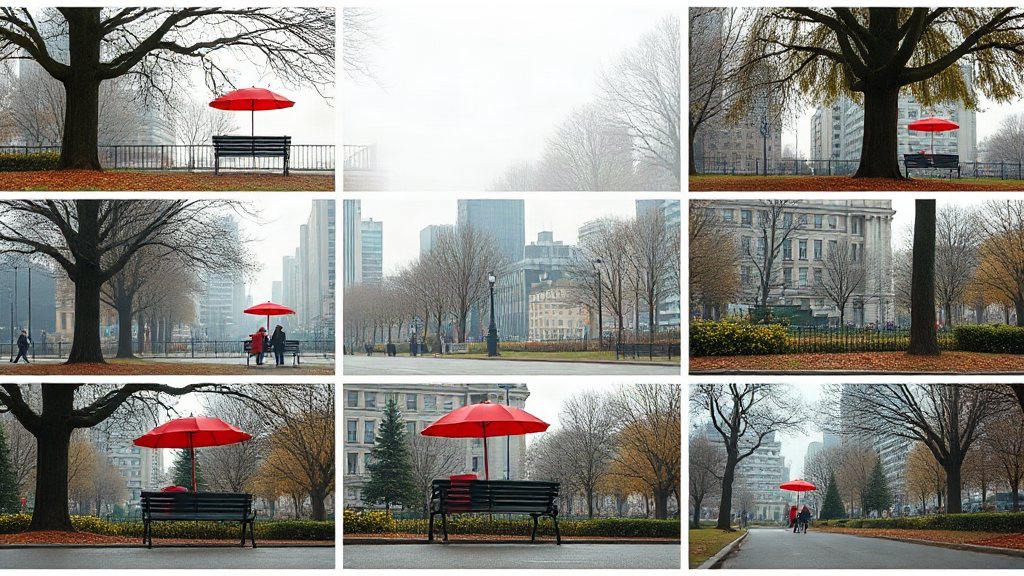
When to use it
- Wide or establishing shot: show where we are
- Medium shot: a person from the waist up, or a product with some context
- Close-up: one detail or one face fills the frame
- Low angle: the subject looks strong or large; high angle: small or exposed
- Dutch angle: tension; POV: we see what a character sees
How to ask an AI model for it
Put the shot size and the angle first in the prompt, then the subject: "Low angle close-up of a ceramic mug on a table". For video, add the move: "slow dolly-in".
Questions
- What are the basic camera shots?
- Wide (or long), medium and close-up are the three basic sizes. Extreme wide and extreme close-up sit at the two ends.
- What is the difference between a shot and an angle?
- The shot size is how much the frame shows. The angle is where the camera stands relative to the subject.
- Which shots suit product ads?
- A close-up for the detail, a medium shot for the product in use, and a wide shot to set the scene. Most short ads cut between those three.
Free credits every month
Sign in with Google and get 50 free credits every month. Unused credits do not roll over. Your credits also work in Claude Code and Codex through the BrShot MCP server.
Signing in shares your Google email address with BrShot; the privacy note says what we keep and for how long. Privacy note.