Glossary · camera and shots
Dutch angle (Dutch tilt)
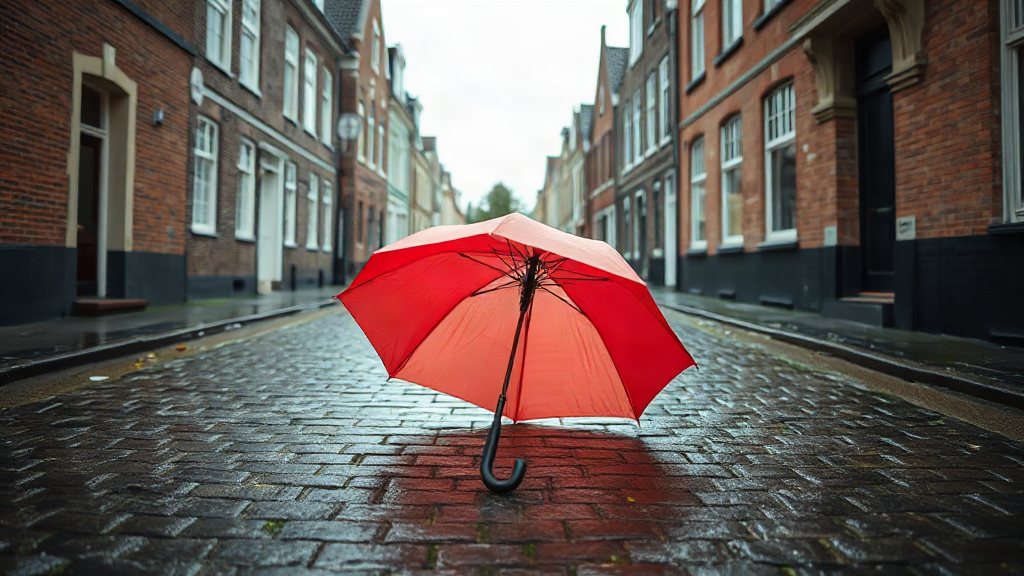
A Dutch angle is a shot where the camera is rolled to one side, so the horizon and the verticals in the frame slope instead of sitting level. It is also called a Dutch tilt, a canted angle or an oblique angle.
Our example
When to use it
- To show that something is wrong, tense or off balance
- To add energy to an action or a sports shot
- For a playful, off-beat product shot that stands out in a feed
How to ask an AI model for it
Name the tilt and its size in the prompt: "Dutch angle, frame tilted 20 degrees". Keep the rest of the scene simple so the slope reads clearly.
Questions
- Why is it called a Dutch angle?
- The name most likely comes from "Deutsch" (German): German expressionist films of the 1920s used the tilt a lot.
- How much should the camera tilt?
- Ten to thirty degrees reads as a deliberate Dutch angle. Less looks like a mistake; much more turns into a graphic effect.
- Is a Dutch angle the same as a slanted camera angle?
- Yes. Slanted, canted and oblique angle all describe the same rolled camera.
Free credits every month
Sign in with Google and get 50 free credits every month. Unused credits do not roll over. Your credits also work in Claude Code and Codex through the BrShot MCP server.
Signing in shares your Google email address with BrShot; the privacy note says what we keep and for how long. Privacy note.