Guide
Music commercial
A music commercial has to let the music lead: pick the track or jingle first, then cut the pictures to its beat. Instruments, hands and rooms with character carry the picture. Our example is a cello by a sunny window, first as a still and then as a 5-second clip with a slow pan.
Step by step
Decide what you sell: a release, lessons, an instrument shop or a venue. The track follows from that.
Find one frame that says the sound before it plays: an instrument in good light.
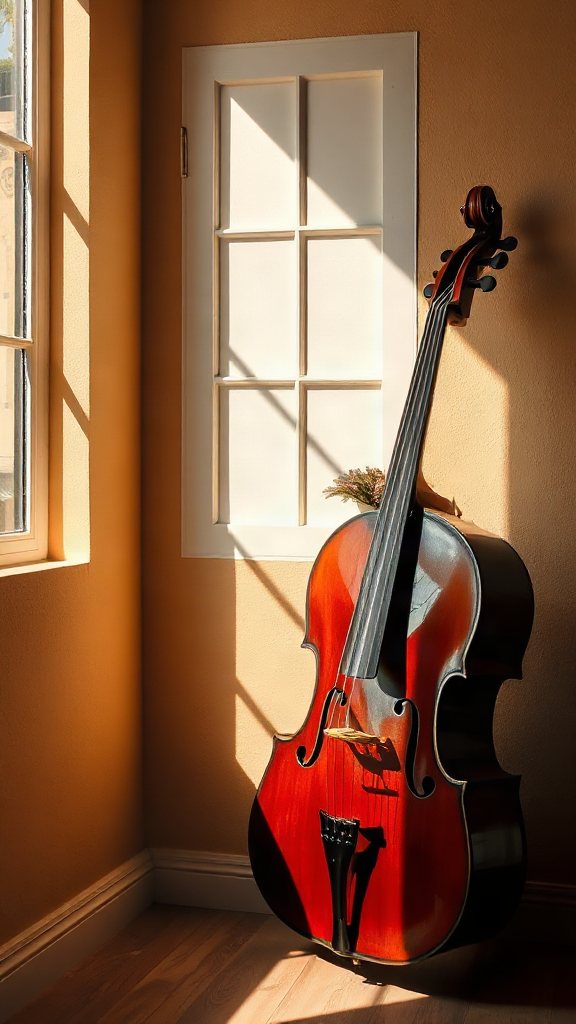
1 credit · 576×1024 Add a slow move so the frame breathes with the music; a pan across the instrument works well.
40 credits · 576×1024 Cut on the beat. Changes that land on the downbeat feel deliberate, even with only three shots.
Put the date, the link or the shop name on screen for the last two seconds, and keep it short.
Questions
- Do I need a full song for a music commercial?
- No. A 10 to 15 second section with a clear start and end is enough for a feed ad. A short jingle also works for a shop or a school.
- Can I make the music with AI?
- Yes. The jingle flow writes and mixes a short track under your clip. For a real release, use the release itself.
- What visuals work without a performer?
- Instruments, hands on keys or strings, a lit room or a vinyl on a turntable. They suggest the sound without a face on camera.
- Is a music video ad the same as a music commercial?
- Not quite. A music video ad is usually a short cut of a music video, run as a paid ad for a new release. A music commercial can also sell an instrument, a venue or lessons. The same rule works for both: let the track lead and cut the pictures to its beat.
Free credits every month
Sign in with Google and get 50 free credits every month. Unused credits do not roll over. Your credits also work in Claude Code, Codex and OpenCode through the BrShot MCP server.
Signing in shares your Google email address with BrShot; the privacy note says what we keep and for how long. Privacy note.